The Challenge
NexaHealth was at a critical inflection point. Their legacy patient engagement platform was showing its age — built on outdated technology, it couldn't support the AI-powered features their hospital partners were demanding. Meanwhile, a major hospital network partnership was contingent on launching these capabilities within four months.
The technical challenge was significant: they needed intelligent appointment scheduling, patient triage assistance, and automated follow-up communications. But here's where it got complicated — healthcare data is sacred. HIPAA compliance isn't optional, and their hospital partners had zero tolerance for patient data leaving their infrastructure.
Every major AI provider (OpenAI, Anthropic, Google) processes data on their servers. For NexaHealth, that was a non-starter. They needed enterprise-grade AI capabilities with complete data sovereignty.
Our Approach
We proposed a solution that seemed ambitious: deploy a self-hosted open source LLM that could match the capabilities of cloud-based alternatives while keeping every byte of patient data on-premise. The key was choosing the right model and optimizing it for healthcare-specific tasks.
After evaluating several options, we selected DeepSeek as our foundation. Its reasoning capabilities and efficiency made it ideal for our use case. We rented dedicated GPU hardware and built a containerized deployment that NexaHealth could run in their own data center.
Key Decisions
Self-Hosted DeepSeek on Dedicated Hardware
Rather than using cloud AI APIs, we deployed DeepSeek on rented GPU infrastructure. This gave NexaHealth complete control over their data while delivering response times under 200ms.
Fine-Tuning on Anonymized Medical Data
We worked with NexaHealth's clinical team to fine-tune the model on anonymized scheduling patterns and triage protocols. The result was an AI that understood their specific workflows.
Fallback-First Architecture
Every AI-powered feature gracefully degrades. If the model is unavailable, the system falls back to rule-based logic. Patients never experience a failure.
HIPAA-Compliant Infrastructure from Day One
We didn't bolt security on at the end. Encryption at rest and in transit, comprehensive audit logging, role-based access control — all built into the foundation.
The Solution
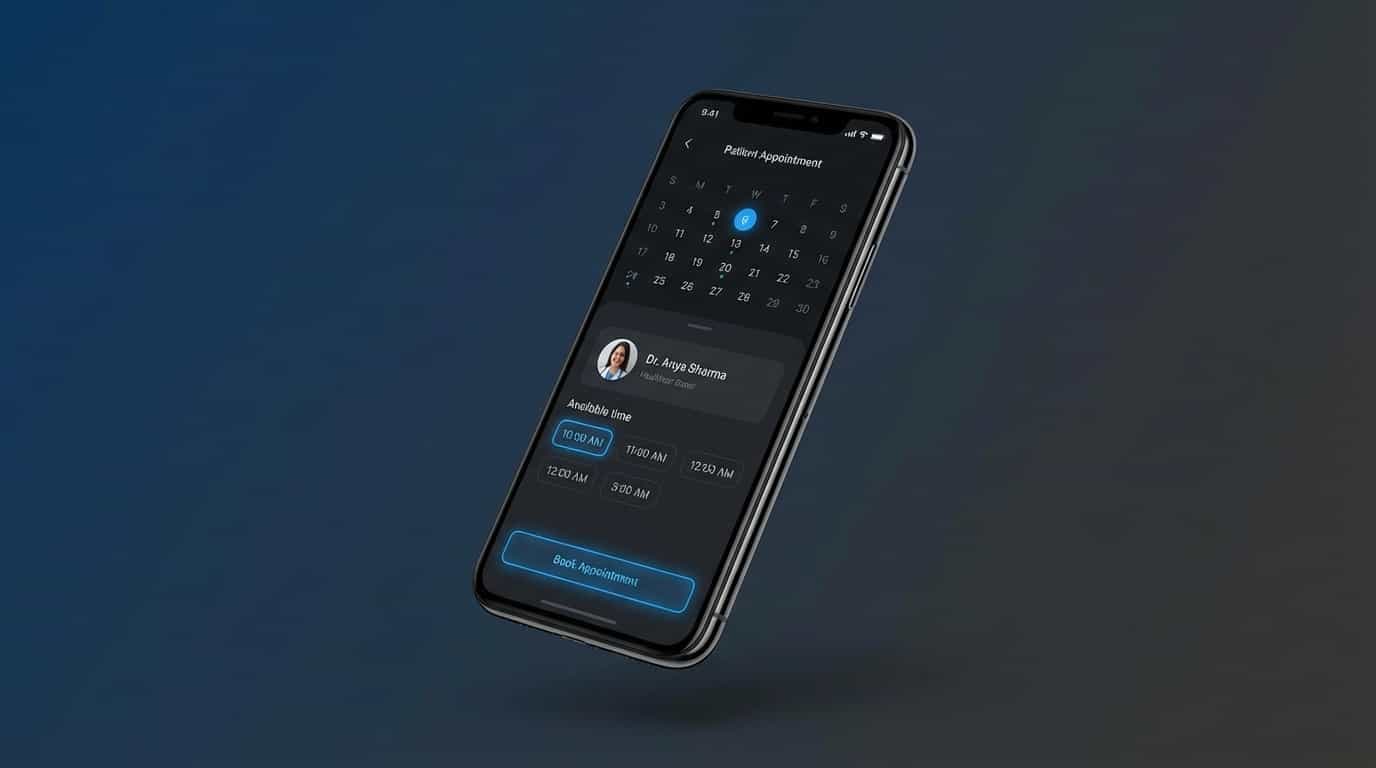
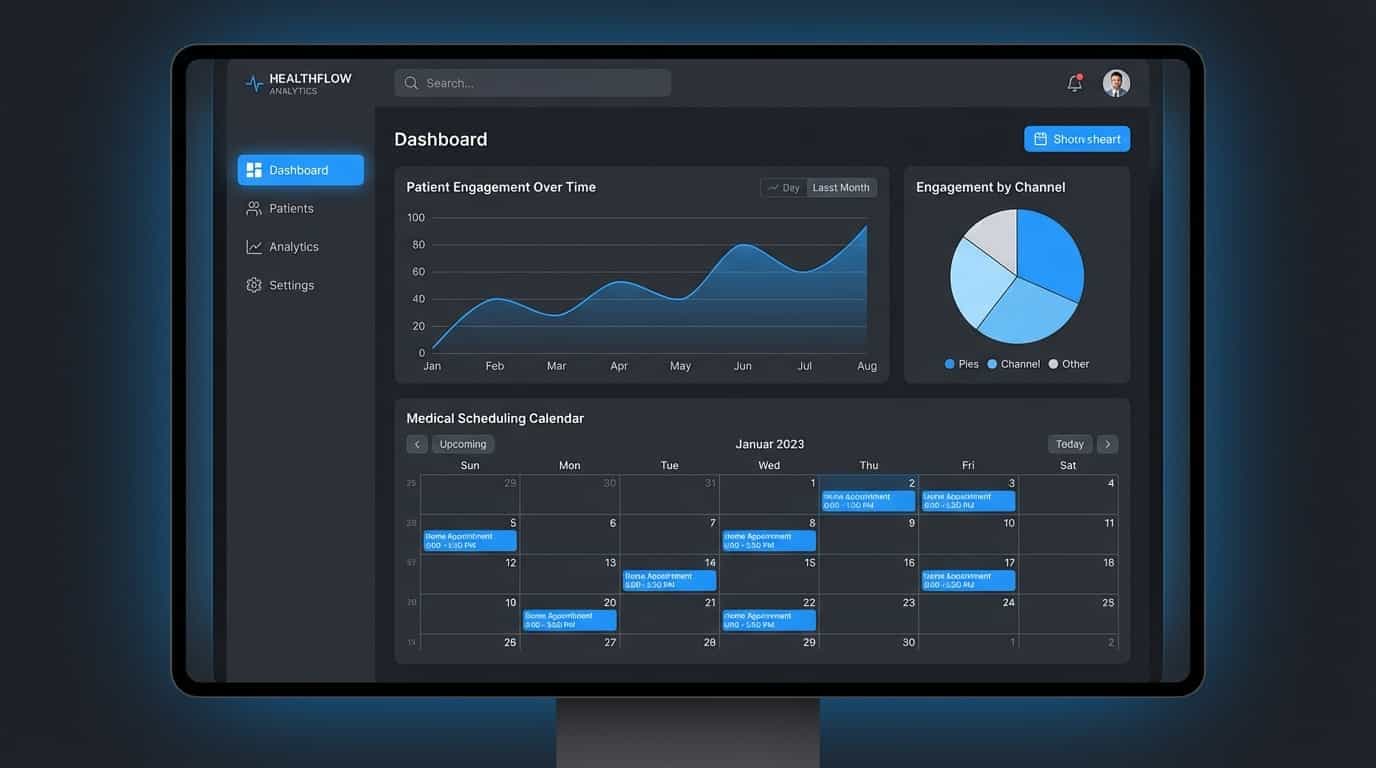
The final platform integrated AI across the entire patient journey. Intelligent scheduling analyzes patient history, provider availability, and appointment urgency to suggest optimal times. The triage assistant helps patients describe symptoms and routes them to appropriate care levels. Automated follow-ups ensure patients stay engaged with their care plans.
All of this runs on NexaHealth's infrastructure. When a patient interacts with the AI, their data never leaves the building. The hospital partners can point to their own servers and say, definitively, "The data stays here."
Tech Stack
- DeepSeek (Self-Hosted LLM)
- Next.js
- Node.js
- PostgreSQL
- Redis
- Docker
- Kubernetes
- NVIDIA A100 GPUs
The Outcome
We shipped on time. Fourteen weeks from kickoff to production, with two weeks of buffer that we used for additional testing and staff training. The platform launched to 50,000 patients across three clinic locations.
The impact was immediate. Scheduling staff reported 70% less time spent on routine appointment coordination. The triage feature reduced unnecessary urgent care visits by routing patients to appropriate care levels. And most importantly, NexaHealth closed their hospital partnership deal.
Six months post-launch, the system has processed over 200,000 patient interactions with zero data privacy incidents. NexaHealth is now expanding to fifteen additional locations.